
Back to government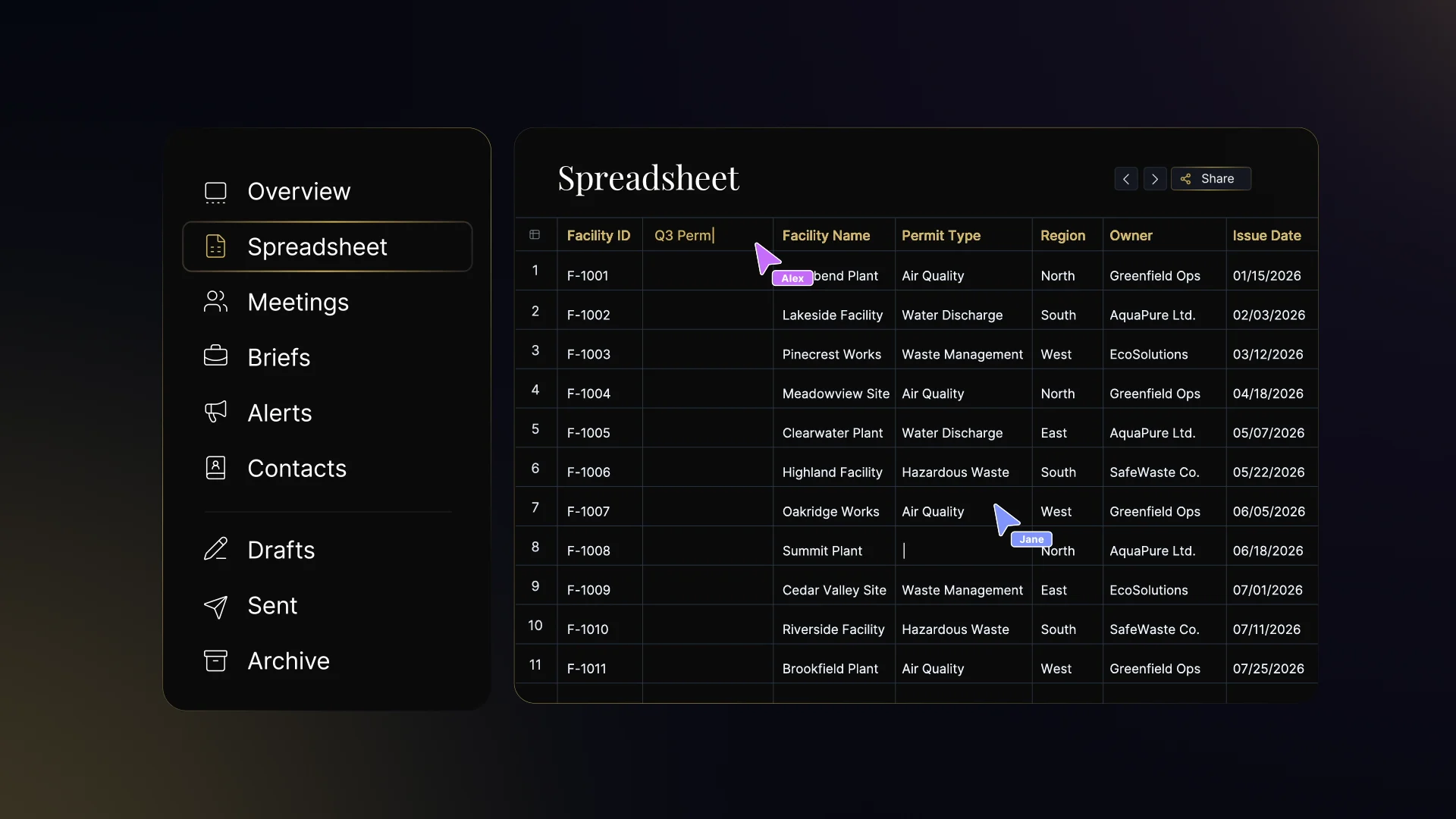
Watch the film 43 seconds
Regulatory
Red tape reduction
Count the restrictions. Then remove the dead ones.
Regulatory efficiency offices, executive teams running a reduction mandate, and rule review staff
Request a briefingWhat it does
Red tape reduction, specifically.
- Inventory restrictions across a title, a program, or an entire code.
- Find provisions with no live enabling authority behind them.
- Identify duplication and conflict between rules that never got reconciled.
- Model what a proposed repeal or amendment actually changes.
- Report progress against a reduction target with the underlying record attached.
In detail
Find obsolete, duplicative, unsupported, and over-burdensome rules before they become reform packages.
- Classify provisions as statutorily required, federally required, agency-discretionary, obsolete, duplicative, or conflicting.
- Trace rules to enabling authority, registers, amendments, guidance, and judicial construction.
- Draft repeal, simplification, and redline packages with a reviewable source trail.
- Count requirements, benchmark peer states, and support cost-benefit or burden analysis.
- Reads entire rule chapters and maps each requirement to the authority behind it.
- Builds batch inventories with status, last-amended date, authority, and cleanup recommendation.
- Separates policy preference from legal constraint so reform teams can move carefully.
- Generates redlines and memos that agencies can review and refine.
- State regulations, statutes, registers, acts, bills, and guidance
- Citation edges, authority chains, court records, and AG opinions
- Public finance, economic, and operational datasets for burden analysis
- Uploaded rule packets, reform lists, and agency source documents
- Rule inventory
- Authority-trace workbook
- Repeal or simplification package
- Burden and CBA memo
- Which requirements are legally mandatory?
- Which rules are obsolete or duplicative?
- What can be repealed without violating enabling authority?
- How does a simpler peer-state approach work?
More regulatory work